An electric hot kettle is a kitchen appliance designed to rapidly boil water for beverages and instant meals, offering speed, precision, and convenience. These devices typically boil a liter of water in 3-5 minutes, significantly faster than stovetop methods, and often include safety features like automatic shut-off and boil-dry protection. Understanding the various types, materials, and features is crucial for selecting the best model to enhance your daily routine.
Types of Electric Kettles: Finding Your Match
Electric kettles come in a dazzling array of styles and functionalities, each designed to cater to different needs and preferences. Knowing the main types is your first step toward making an informed choice.
Standard Boil-Only Kettles
Standard boil-only kettles are straightforward appliances that rapidly bring water to a rolling boil. They typically feature an automatic shut-off for safety and are generally the most affordable and simplest to operate.
Variable Temperature Kettles
For the discerning tea aficionado or coffee connoisseur, precise temperature control is a major upgrade. Different beverages require specific brewing temperatures – green tea at 175°F (80°C), black tea at 205°F (96°C), and French press coffee around 200°F (93°C). Variable temperature kettles offer preset options or a dial to select your desired heat, ensuring you extract the optimal flavors from your drinks. Some advanced models even feature “keep warm” functions, maintaining your selected temperature for an extended period.
Gooseneck Kettles
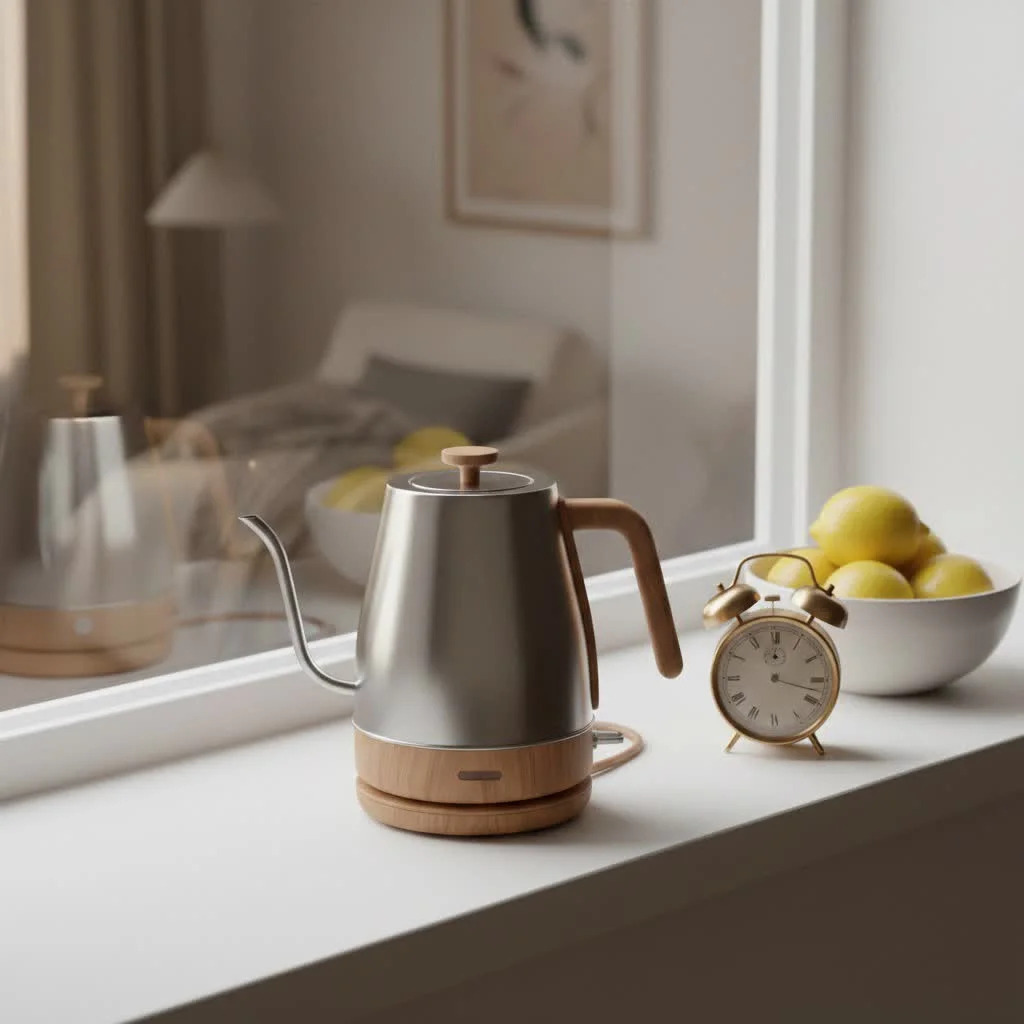
Distinguished by their long, slender, curved spouts, gooseneck kettles are favored by pour-over coffee enthusiasts. The unique spout design allows for a slow, steady, and precise pour, which is crucial for saturating coffee grounds evenly and achieving an optimal extraction. While many are variable temperature models, some boil-only versions are available.
Material Matters: Glass, Stainless Steel, and Plastic
The material of your electric hot kettle impacts its durability, aesthetics, heat retention, and even perceived safety.
- Stainless Steel: Known for its durability and resistance to rust and corrosion, stainless steel is a popular choice. It retains heat well and is considered non-toxic, not leaching chemicals into your water. However, the exterior can get very hot.
- Glass: Visually appealing, glass kettles allow you to watch the mesmerizing dance of boiling water. They are typically made from borosilicate glass, which is non-toxic and non-reactive. While they heat quickly, they don’t retain heat as long as stainless steel and can be more fragile.
- Plastic: Often the most affordable and lightweight option, plastic kettles are portable and convenient. However, lower-end models might yellow over time, and some users express concerns about potential chemical leaching, though reputable brands use food-grade, BPA-free plastics.
- Ceramic: These kettles offer a charming, often retro aesthetic, retaining heat quite well. They can be heavier and more prone to breakage than other materials.
The Advantages and Disadvantages of Electric Kettles
As a seasoned expert, I can tell you that electric kettles offer numerous benefits, but like any appliance, they come with a few trade-offs.
The Upsides (Pros)
|
Our Picks for the Best Electric Kettle in 2026
As an Amazon Associate I earn from qualifying purchases.
|
||
| Num | Product | Action |
|---|---|---|
| 1 | Amazon Basics Electric Kettle with Glass Carafe for Tea and Coffee, BPA-Free, Fast Boiling, Auto Shut-Off, 1.7 Liter, 1500W, Black and Silver |

|
| 2 | Chefman Electric Kettle, 1.8L 1500W, Hot Water Boiler, Removable Lid for Easy Cleaning, Auto Shut Off, Boil-Dry Protection, Stainless Steel Filter, BPA Free, Borosilicate Glass Electric Tea Kettle |
|
| 3 | Amazon Basics Electric Kettle with Glass Carafe for Tea and Coffee, BPA-Free, Fast Boiling, Auto Shut-Off, 1 Liter, 1500W, Glass and Steel |
|
| 4 | LONGSEED Ceramic Electric Kettle, 1.2L/1000W Boil Water Quickly and Easily,Boil-Dry Protection,Auto Shut Off, Detachable Swivel Base,Hot water kettle for Coffee & Tea |
|
| 5 | Amazon Basics Electric Stainless Steel Kettle for Tea and Coffee, BPA-Free, Fast Boiling, Auto Shut-Off, 1.7 Liter, 1500W, Black and Silver |
|
| 6 | OVENTE Electric Kettle, 1.7L Fast Boiling Water Heater for Coffee or Tea, BPA Free with Water Level Gauge, Auto Shut-Off, Boil-Dry Protection, Indicator Light and Removable Filter, White KP72W |
|
| 7 | Chefman Electric Kettle with Temperature Control, 5 Presets LED Indicator Lights, Removable Tea Infuser, Glass Tea Kettle & Hot Water Boiler, 360° Swivel Base, BPA Free, Stainless Steel, 1.8 Liters |
|
| 8 | Longseed Ceramic Electric Kettle, 1.5 Liters/1200W Electric Tea Kettle, Heats Water Quickly, Automatic Shut - off, Boil - Dry Protection, Free Of BPA, Matte White |
|
| 9 | Cosori Electric Kettle, No Plastic Contact With Water, Wide Mouth For Easy Cleaning, Auto Shut Off, 1.7L Tea Kettle & Hot Water Boiler, Water Heater & Teapot, Borosilicate Glass, Black, 1500W |
|
| 10 | Cuisinart PerfecTemp 1.7-Liter Electric Kettle, Cordless Electric Tea Kettle, 1500W for Fast Heat-Up, 6 Preset Temperatures, 30-Minute Keep Warm, Stay Cool Nonslip Handle, CPK-17P1 |
|
Electric kettles are a staple in modern kitchens for good reason:
- Speed: They heat water significantly faster than stovetop kettles or microwaves, often boiling a full liter in just 3-5 minutes. This is a huge time-saver during busy mornings.
- Energy Efficiency: While it might seem counterintuitive, electric kettles are generally more energy-efficient for boiling water than stovetop methods, as they directly heat the water with minimal heat loss.
- Safety Features: Most modern electric kettles come equipped with automatic shut-off when the water reaches boiling point or when the kettle is lifted from its base. Many also include boil-dry protection, preventing damage if the kettle is accidentally switched on without water.
- Convenience and Portability: Cordless designs allow you to lift the kettle from its base and pour anywhere. They are also highly portable, making them ideal for offices, dorms, or travel.
- Temperature Control: As mentioned, variable temperature models offer unparalleled precision for brewing a variety of hot beverages, enhancing flavor profiles.
- Cleanliness: Unlike stovetop kettles that can accumulate soot, electric kettles remain clean on the exterior.
The Downsides (Cons)
While electric kettles are fantastic, they do have a few minor disadvantages:
- Cost: High-end models with advanced features like variable temperature control and gooseneck spouts can be more expensive than basic stovetop kettles.
- Counter Space: They occupy dedicated counter space, which can be a consideration in smaller kitchens.
- Cleaning: While the exterior stays clean, the interior can develop limescale buildup, especially in areas with hard water, requiring regular descaling.
- Durability (for some materials): Plastic models may not last as long as stainless steel, and glass kettles are more susceptible to breakage if dropped.
How to Choose the Right Electric Kettle for You
Selecting the perfect electric hot kettle involves considering your lifestyle, needs, and preferences. Here’s a checklist from Bppuc to guide your decision:
Capacity and Size
To determine the right kettle capacity, consider how much water you typically need. For a single user or a couple, a smaller 0.5 to 1-liter kettle is efficient. For families or those who frequently host guests, a 1.7 to 2-liter capacity is more practical. Smaller kettles heat water faster and use less energy for smaller volumes.
Power and Heating Speed
Yes, wattage absolutely affects how fast an electric kettle boils water. Kettles with higher wattage (e.g., 1500-2000 watts) will boil water much faster, which is ideal for hectic mornings. If speed is a top priority, look for higher wattage models.
Temperature Control and Settings
Temperature control is important in an electric kettle for anyone who appreciates specific beverage temperatures, making variable temperature control a must. Look for models with preset temperature options or a customizable dial. A “keep warm” function is also a valuable addition, allowing you to maintain your desired water temperature for up to 30-60 minutes.
Material and Durability
Stainless steel generally offers the best combination of durability, heat retention, and non-toxicity for an electric kettle. If aesthetics are paramount and you prefer to see the water boil, a borosilicate glass kettle is a beautiful choice, but handle it with care. Avoid cheap plastic if you’re concerned about longevity or chemical interactions.
Safety Features
Essential safety features to look for in an electric kettle include automatic shut-off, boil-dry protection, a cool-touch exterior, and a sturdy handle with a drip-free spout.
- Automatic Shut-Off: Turns off the kettle once water boils or when it’s lifted.
- Boil-Dry Protection: Prevents the heating element from activating if there’s no water, avoiding damage and fire hazards.
- Cool-Touch Exterior: Double-walled designs, particularly in stainless steel kettles, keep the exterior cool to the touch, minimizing burn risks.
- Sturdy Handle and Drip-Free Spout: A comfortable, secure grip and a well-designed spout prevent accidental spills and scalding.
Design and Aesthetics
While functionality is key, the aesthetic appeal of your electric kettle can significantly impact your kitchen’s overall look. Whether you prefer a sleek, modern stainless steel design, a clear glass body, or a retro ceramic style, there’s a kettle out there for every decor.
Safety Tips and Energy-Saving Habits
Even with the inherent safety features of modern electric kettles, adopting good habits is crucial for both personal safety and energy efficiency. From my experience, small changes can make a big difference.
Prioritizing Safety
Key safety precautions when using an electric kettle include filling to the correct markings, ensuring dry hands and surfaces, monitoring while boiling, proper placement away from counter edges, managing the cord, and never submerging the electrical base in water.
- Fill to the Markings: Never overfill your kettle past the “MAX” line, as boiling water can spill out and cause burns or electrical hazards. Conversely, ensure the “MIN” line is covered to prevent boil-dry damage.
- Dry Hands and Surfaces: Always ensure your hands and the countertop are dry before plugging in or operating the kettle. Electricity and water are a dangerous mix.
- Monitor While Boiling: Although most kettles have automatic shut-off, it’s always wise to stay nearby while it’s in operation, especially if children or pets are present.
- Placement: Position your kettle away from the edge of the counter to prevent accidental knocks, particularly in homes with active children.
- Cord Management: If your kettle has a cord, keep it neatly tucked away to avoid tripping hazards or accidental pulling.
- Never Submerge the Base: The electrical base should never be submerged in water. Clean it with a damp cloth only.
Smart Energy-Saving Habits
You can make your electric kettle more energy-efficient by boiling only the water you need, keeping the lid closed, avoiding long-term “keep warm” mode, regular descaling, unplugging when not in use, and considering a vacuum-insulated kettle. “Many people don’t realize that simple daily habits can significantly cut down on your kettle’s energy consumption,” says Sarah Chen, a long-time advocate for sustainable kitchen practices.
- Boil Only What You Need: This is perhaps the most impactful tip. Heating only the amount of water you require saves both energy and time. Measuring cups can be your best friend here.
- Keep the Lid Closed: A closed lid traps heat, allowing the water to boil faster and reducing energy waste.
- Avoid Long-Term “Keep Warm” Mode: While convenient, continuous “keep warm” functions consume electricity. If you don’t need hot water immediately, consider boiling as needed or transferring boiled water to an insulated thermal flask.
- Regular Descaling: Limescale buildup acts as an insulator, reducing heating efficiency and increasing energy consumption. Regular cleaning keeps your kettle working optimally.
- Unplug When Not in Use: Many appliances, including kettles, draw a small amount of “phantom” power even when turned off. Unplugging it completely eliminates this standby drain.
- Consider a Vacuum-Insulated Kettle: These advanced kettles can keep water hot for hours without needing to be plugged in, drastically reducing reheating frequency and energy use.
Cleaning and Maintenance for Your Electric Kettle
Proper cleaning and maintenance are vital for extending the lifespan of your electric hot kettle and ensuring your water always tastes fresh. The primary foe here is limescale, a mineral deposit common in hard water areas.
Descaling the Interior
You should descale your electric kettle every 1-3 months, depending on your water hardness and usage. If you notice a white, crusty buildup or if your kettle takes longer to boil, it’s time to descale.
Method 1: White Vinegar
- Prepare Solution: Mix equal parts white vinegar and water (e.g., 1 cup vinegar, 1 cup water). Fill the kettle with this solution until the limescale is covered.
- Boil and Sit: Bring the mixture to a boil, then turn off the kettle and let it sit for at least 30 minutes, or even overnight for heavy buildup.
- Rinse Thoroughly: Discard the solution. Fill the kettle with fresh water, boil, and discard. Repeat this 2-3 times to eliminate any lingering vinegar smell or taste.
Method 2: Lemon Juice or Citric Acid
- Prepare Solution: For lemon juice, mix equal parts lemon juice and water. For citric acid, add 1-2 tablespoons of citric acid powder to a kettle filled halfway with water.
- Boil and Sit: Bring the solution to a boil, then turn off the kettle and let it sit for about 20-30 minutes.
- Rinse Thoroughly: Discard the solution. Fill, boil, and rinse with fresh water 2-3 times to remove any residue.
Method 3: Baking Soda (for light buildup)
- Prepare Solution: Add 1-2 tablespoons of baking soda to the kettle and fill with water.
- Boil and Scrub: Bring to a boil, let it cool for 10 minutes. Gently scrub the inside with a non-abrasive brush to remove any debris.
- Rinse Thoroughly: Rinse several times with fresh water.
Cleaning the Exterior
To clean the outside of your electric kettle, a soft, damp cloth with a mild dish soap is usually sufficient to wipe away water spots, fingerprints, and grime. Dry with a microfiber cloth to prevent streaks. to avoid getting the electrical base wet.
Water Filter Maintenance
Many electric kettles come with a removable mesh filter, often located in the spout, to catch limescale particles. Remove and rinse this filter regularly under running water to ensure clear pouring. If heavily scaled, soak it in your descaling solution.
Frequently Asked Questions (FAQ)
Q1: Is an electric kettle better than a microwave for heating water?
A1: Yes, an electric kettle is generally more efficient and faster than a microwave for heating water, especially for larger quantities. Microwaves often heat unevenly, while kettles provide a consistent, rapid boil.
Q2: Can I boil anything other than water in an electric hot kettle?
A2: No, electric kettles are designed specifically for boiling water. Boiling other liquids, such as milk, soup, or coffee, can damage the heating element, create hazardous residue, and void your warranty.
Q3: How long does an electric kettle usually last?
A3: With proper care and regular maintenance, a good quality electric kettle can last anywhere from 3 to 7 years, or even longer for premium models. Limescale buildup is the biggest factor in reducing lifespan.
Q4: Are plastic electric kettles safe to use?
A4: Reputable brands use food-grade, BPA-free plastic for their electric kettles, making them generally safe. However, if you have concerns about plastic, stainless steel or glass kettles are excellent alternatives.
Q5: What is “boil-dry protection” in an electric kettle?
A5: Boil-dry protection is a crucial safety feature that automatically turns off the heating element if the kettle is switched on with insufficient or no water inside. This prevents overheating, potential damage to the kettle, and fire hazards.
Q6: Can I leave water in my electric kettle overnight?
A6: It’s generally not recommended to leave water sitting in your electric kettle overnight or for extended periods. Stagnant water can encourage mineral and bacteria buildup, leading to increased limescale and potentially affecting the taste of your next brew. Empty and rinse your kettle after each use.
improve your Daily Ritual with the Right Electric Hot Kettle
From the first comforting sip of morning tea to the swift preparation of instant meals, the electric hot kettle is an indispensable appliance. By understanding the different types, their advantages and disadvantages, and how to choose the right one for your needs, you’re not just buying a kettle; you’re investing in convenience, efficiency, and safety. the tips for energy saving and consistent cleaning, and your electric hot kettle will serve you faithfully for years to come. At Bppuc, our mission is to empower you with expert knowledge, making sure your choices are always informed and your kitchen experience, exceptional. So go ahead, find your perfect electric hot kettle, and enjoy the pure joy of perfectly heated water at your fingertips!
Get our weekly buyer guide
Practical specs, not advice. Unsubscribe anytime.
I bought an electric kettle after reading about the different types, hoping to speed up my instant meal prep. While it boils water fast, I’ve noticed the exterior gets pretty hot to the touch, which makes me a little nervous with kids around. The boil-dry protection is a good safety feature, but I’d prefer a cooler exterior. It does the job, but could be better.
I finally upgraded from my old stovetop kettle and I’m so glad I did! The rapid boil feature on my new electric kettle is a game-changer for my morning tea. It really does heat up a liter of water in just a few minutes, which saves me so much time when I’m rushing out the door. Plus, the automatic shut-off gives me peace of mind.
This electric kettle has seriously enhanced my daily routine. I love how quickly it boils water for my herbal teas throughout the day. The convenience of not having to watch a pot on the stove is fantastic, and the sleek design looks great in my kitchen. Definitely a worthwhile investment for anyone who drinks a lot of hot beverages.
I was looking for something that could handle my daily pour-over coffee routine, and a standard boil-only kettle seemed like the best fit. This one works great for getting water hot quickly. My only minor complaint is that I wish it had a slightly longer cord, but it’s not a dealbreaker. Overall, very happy with the convenience.